

How To Install Squid Proxy On Windows

How to install Squid proxy on Windows
June 15, 2022
Squid is a high functioning caching proxy for web clients supporting FTP, gopher, ICAP, ICP, HTCP and HTTP data objects. Squid reduces network bandwidth, data transfer and improves response times by caching and reusing frequently requested web pages. Squid has extensive access command and is a great server accelerator. Information technology runs on most of the bachelor operating systems, including Windows, and is licensed under the GNU GPL.
Squid proxy official website: http://www.squid-enshroud.org
Squid tin be compiled and run on Windows as a system service using the Cygwin emulation environment, or it can exist compiled in Windows native mode using the MinGW + MSYS development environment. Windows NT 4 SP4 and after are supported.
Known Limitations
- Squid features that don't work on Windows:
- DISKD: still needs to be ported
- Transparent proxy: missing non-commercial intercept commuter for Windows
- WCCP: These features take not been ported. Without transparent proxy support, this is not necessary.
- SMP support: Windows equivalent of UDS sockets is not implemented
- Certain sections of lawmaking can brand blocking calls.
- Some external helpers may not work.
- The number of file descriptors is strictly limited to 2048 when building with MinGW.
- Squid-iii.x of all official releases has serious build problems.
Squid prebuilt binaries for Windows
This is the easiest style to go Squid on Windows: open source project https://github.com/diladele/squid-windows provides Windows MSI installer files for Squid Proxy Server. It makes it possible to install Squid in just a few clicks. The current build is based on the latest Squid 4.14 build for Cygwin nether Windows 64 flake.
To download the installer, go to the website: https://squid.diladele.com/ and click the link "MSI installer for SQUID FOR WINDOWS".

Run the downloaded file with a double click and follow the prompts of the installer.
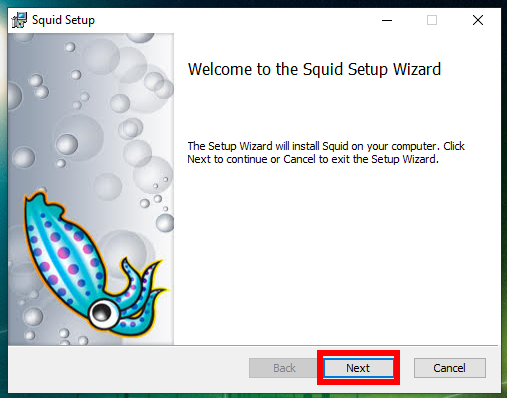
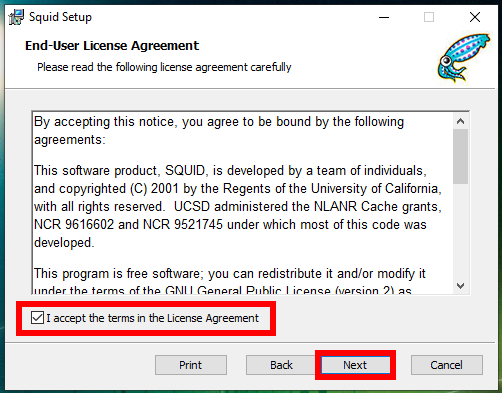
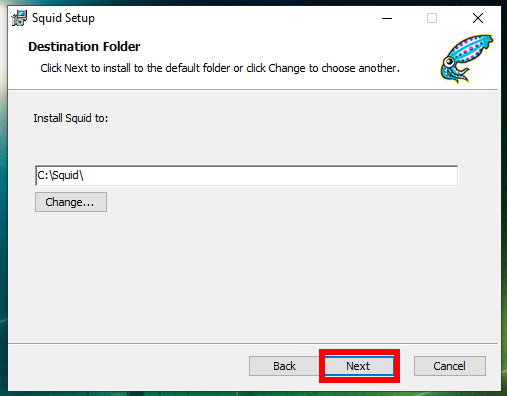
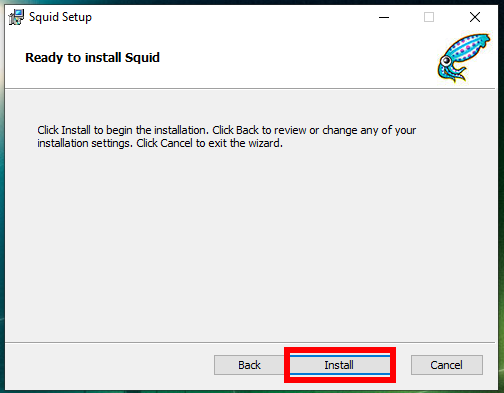
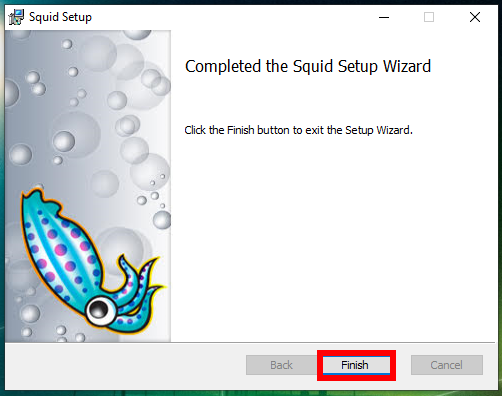
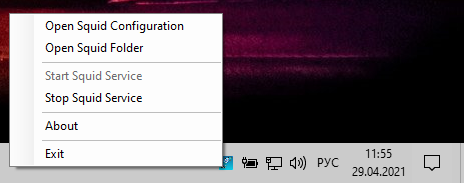
Immediately after the installer completes, an icon will appear next to the clock to control the Squid service:

When yous click on it, the following options will exist available:
- Open Squid Configuration
- Open Squid Folder
- Start Squid Service
- End Squid Service
- About
- Go out
The path to the configuration file in Windows: C:\Squid\etc\squid\squid.conf. Proceed this in mind, as all subsequent sections will bear witness the setup using a Linux example.
For the changes made in the configuration file to take effect, you lot need to restart the Squid service, to do this, end and start it once more.
The Squid service will automatically start when the computer is turned on, and for the icon to appear in the tray for managing Squid, you demand to run the file C:\Squid\bin\Diladele.Squid.Tray.exe.
In the config file you can see paths like this: "/cygdrive/d/squid/cache". To sympathise them, see How to access disks in Cygwin. In this case /cygdrive/d/squid/cache is D:\squid\cache.
In that location will also be paths like this: /var/cache/squid – these are all directories inside the C:\Squid folder. That is, for instance, /var/cache/squid is really C:\Squid\var\cache\squid\.
To check if the Squid service is really listening on a port to connect, you tin can practise the post-obit:
1. Press Win+10 and select "Windows PowerShell (admin)" in the carte du jour that opens.
2. Run the commands in sequence:
cmd for /f "tokens=1,2,3,4,5*" %i in ('netstat -aon ^| findstr ":3128" ^| findstr /i listening') practice echo %j %l & @tasklist | findstr %m You will verify that Squid is indeed listening on port 3128.

Remember that if you are using a firewall, then you need to open the port that the proxy service is listening on, if you have non changed it, then by default it is 3128.
The following steps are shown using Linux as an example, since Squid is much more common on Linux, not Windows. However, you Windows users can use the following information to configure Squid on Windows. But you need to keep in mind the following nuances:
1. When the command to open a file is given, y'all must open up your configuration file, the path to which is given simply in a higher place.
ii. When it is said that you need to restart the service and the control is given for this, you need to open the assistant in the tray and stop, and and then start the service in that location.
If you are an advanced user, yous can manage the service from the command line (open with administrator rights):
net stop squidsrv cyberspace start squidsrv
See too: How to manage services on Windows
To control the autostart of a service, see the article "How to disable autostart of programs and services in Windows".
three. Most likely (I did not check) you will not exist able to configure authorization by login and password on the proxy server, since many (or all) helpers do not work in Windows.
4. In the configuration file, the paths to the files in Linux and Windows may be the aforementioned, since Cygwin emulates the Linux working environment, simply double-check.
See also the Squid setup guide: How to create and configure a Squid proxy server

Source: https://suay.site/?p=1187
Posted by: mosleygrencir39.blogspot.com
0 Response to "How To Install Squid Proxy On Windows"
Post a Comment